The Stories Behind Iconic World Cup Soccer Jerseys
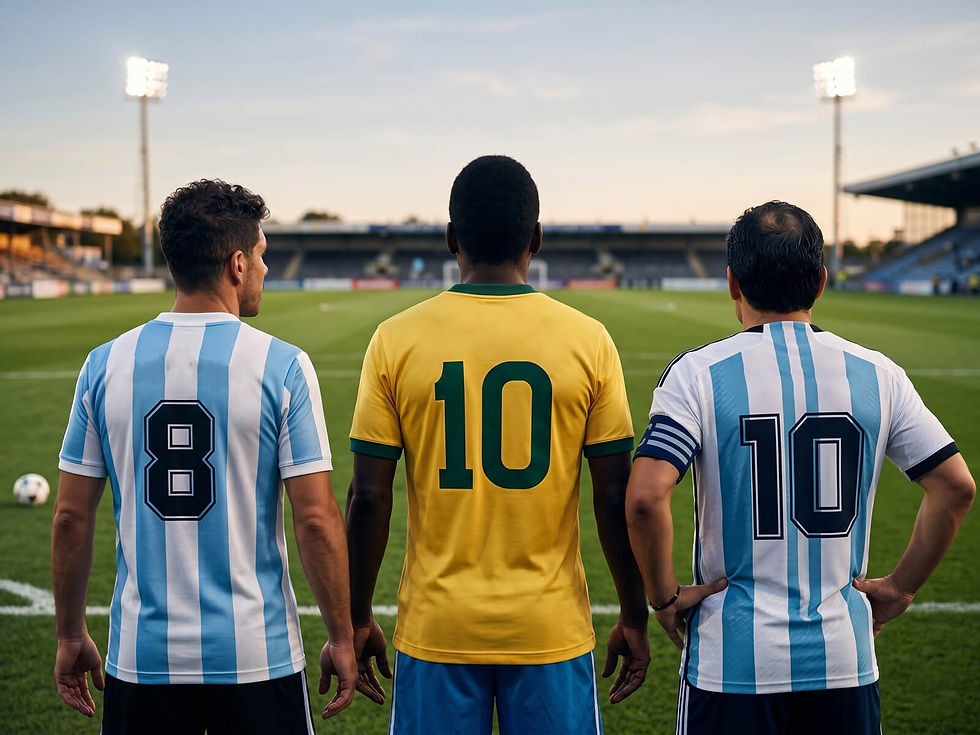
There’s something glorious about the sight of a beautifully designed soccer kit against the vivid green of a soccer field. Picture Pele’s Brazil in 1970, or Maradona and Messi’s Argentina in 1986 and 2022.
World Cup shirts showcase the spirit of a soccer nation. They’re the quintessential symbol of a national team’s soccer heritage, holding a special place in the hearts and minds of soccer fans the world over.
Today’s soccer shirts are made from a blend of synthetic fibers, with lightweight, breathable, and moisture-wicking qualities that make them more comfortable than ever before. They’ve evolved to become a part of fashion off the field.
The Evolution of World Cup Soccer Jerseys

When you think of the most historic World Cup soccer shirts, the beauty is in the simplicity. Brazil’s pale golden-yellow shirts with rounded green collars, bright blue shorts and gleaming white socks promised an endless summer of sunshine and beautiful soccer in 1970. In 1974, Johan Cruyff’s Netherlands team blended ‘total football’ with pure 70s style in classic orange while in 1978, Peru introduced the iconic white shirt red sash design that’s been synonymous with their team ever since.
Argentina’s Albiceleste showcased the epitome of elegant simplicity with their dazzling sky-blue and white stripes and close-fitting cotton in 1986. The sight of Diego Maradona slaloming past defenders with ease still haunts English soccer fans to this day.
In 1988, West Germany used their national flag to stunning effect with the piercing white of their Adidas soccer shirts offset by a jagged black, red and gold design that today would look equally at home on a Berlin dancefloor as it does on a soccer field.
Into the 1990s, designs became more daring and offbeat. World Cup 1998 saw an explosion of abstract designs, from the geometric brilliance of Jamaica’s (so-far) one and only World Cup jersey to Croatia’s first ever appearance of its famous red and white checkered kit.
In recent years, soccer jerseys have found that sweet spot between vintage simplicity and offbeat modern design, with Nigeria’s stunning green 2018 jersey and Japan’s 2020 blue camo kit particular highlights.
The Intersection of Fashion and Soccer

For many years, soccer shirts have been far more than just athletic performance gear. Increasingly, the worlds of soccer and fashion have been merging, with some of the biggest fashion brands getting involved in the beautiful game.
At the 2022 Qatar World Cup, Iranian brand Majid brought a classic round-neck design with simple flag motifs to the Iran team’s home and away jerseys, while One All Sports incorporated Cameroon’s logo with its dazzling green design.
Long before these contemporary crossovers, Levis set the standard through a bold collaboration with the Mexican national team at the Argentina World Cup in 1978. Thankfully, they left the denim for the streets, instead opting for a red-green double stripe against a white background.
More recently, Japanese fashion brand Uniqlo kitted out the Sweden women’s soccer team for the Tokyo Olympics with an eye-catching fluorescent yellow home shirt featuring subtle blue accents. Just two years ago, in 2023, English fashion designer Grace Wales Bonner brought her soulful designs to the world of soccer, collaborating with Adidas on the Jamaica away jersey to stunning effect, with pinstripe styling, vibrant color contrasts and a retro ‘80s vibe.
The Most Controversial World Cup Soccer Jerseys

While some soccer jerseys live long in the memory due to dazzling designs and the iconic teams that wear them, others linger long in the mind for breaking the rules and creating controversy. Some of these infamous World Cup shirts may have caused problems at the time, but nowadays, they’ve attained must-have status.
Cameroon won the 2002 African Cup of Nations, but their blistering soccer wasn’t the only talking point. Puma’s sleeveless design was hugely controversial, with FIFA insisting the “vests” would not be worn later that year during the 2002 World Cup, banning the controversial shirts. A big part of the reason was that official sponsors couldn’t have their logos displayed on a soccer jersey without sleeves.
However, the Cameroon team would not be bullied. Instead, they just stitched black sleeves onto the inside of the jersey, so that it still had the same sleeveless style. Today, these soccer shirts sell for hundreds of dollars on second-hand websites.
At the 2022 Qatar World Cup, Denmark made their feelings known loud and clear about Qatar’s alleged human rights abuses. The soccer kit’s manufacturer Hummel released a statement along with the new kit, explaining that the toned-down, logo-free design was a “protest against Qatar and its human rights record.”
Ahead of its home World Cup in 2014, Brazil launched a pitch-black third kit, a complete contrast to the vivid colors of its home kit. The kit was widely criticized at the time, although following a recent special edition release has now attained something of a cult status.
Euro 2024 Jerseys

The recent Euro 2024 tournament in Germany was a great showcase for soccer jerseys. From modern tweaks to traditional designs to all-out instant classics, this was a tournament that was teeming with innovative designs that will surely be remembered in years to come.
Adidas created an innovative wave design that blended across jerseys and shorts for eight national teams, including standout tricolor designs for Germany, Italy and the eventual winners, Spain.
France’s gradient blue-to-red pinstripe away kit with oversized cockerel logo was completely unique, while Belgium’s Tintin-inspired away kit caused quite a stir, with a light blue jersey and brown shorts certainly a unique addition to the long list of memorable tournament kits. All-time classic or a massive misfire? Only time will tell.
Meanwhile, England’s kit caused a controversy before a ball was even kicked. Kit designer Nike decided to play with the classic red cross on a white background with the detailing on the collar, opting for a “playful update” of the St George’s Cross with a mix of red, blue, and purple. Many were outraged, cementing its probable future cult status.
Why World Cup Shirts Become Iconic

With iconic color schemes, designs that break the mold and details that make the whole kit stand out, World Cup soccer jerseys embody the essence of a team and encapsulate the whole identity of a nation, from its past right up to its present. They act as a bridge between the players and the fans, binding people together through magical sporting moments, crossing over into the world of fashion and enabling fans to show their love of the beautiful game in their everyday lives.
At GAFFAN, we design soccer t-shirts that stand the test of time. We live and breathe soccer, catering to fans through a range of World Cup soccer shirts with minimalist styles and a fashion-forward approach, making them versatile for daily use.